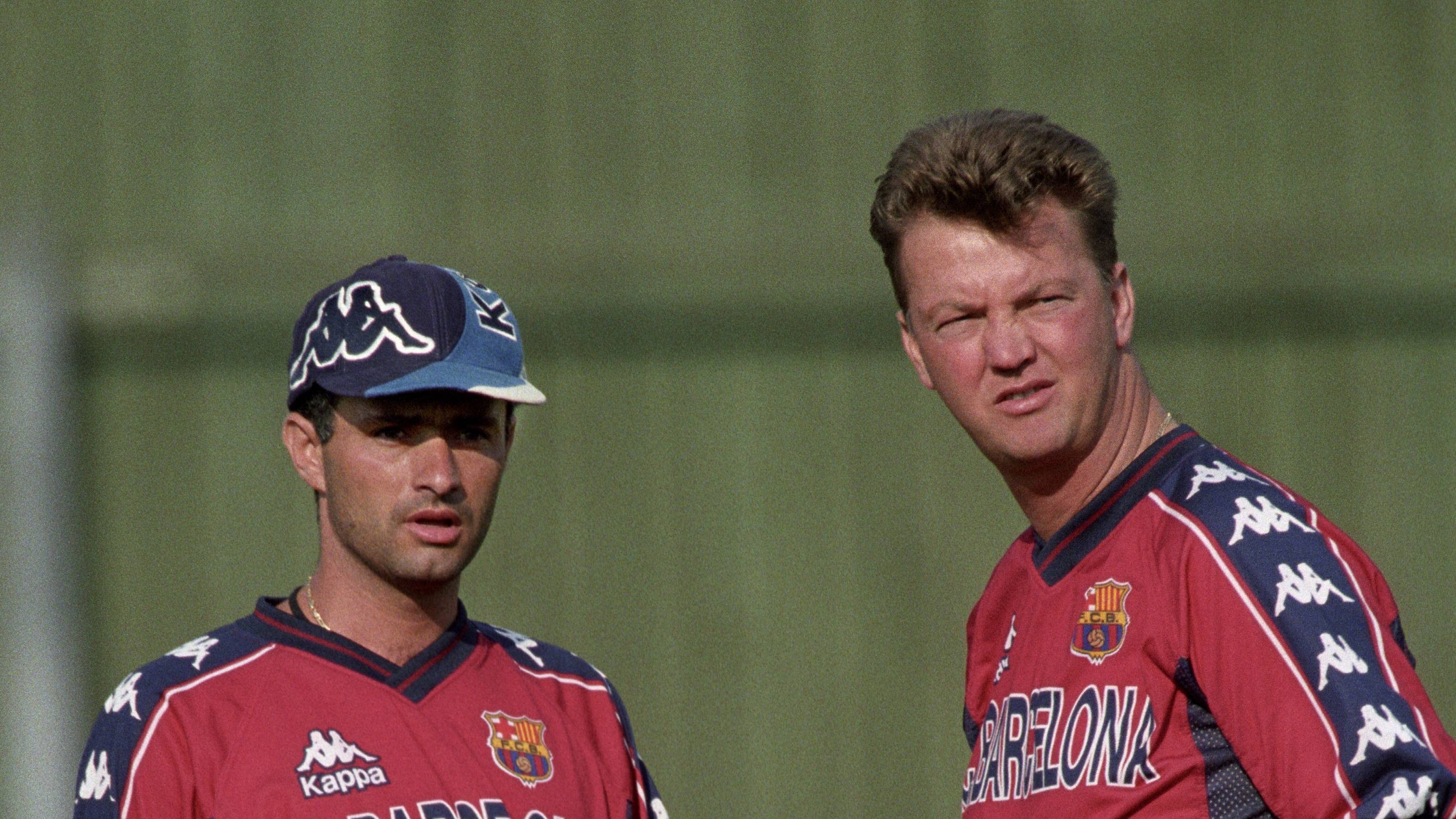
José Mourinho's time at Barcelona is remembered by many for the fierce rivalry he later built against the Catalan club as a coach. Goal.com has published a retrospective looking at the earlier chapter, when a 33-year-old Portuguese arrived in Catalonia alongside Bobby Robson and worked his way from interpreter to a respected member of the coaching staff.
The article, published on 24 October 2026, traces Mourinho's path from an unfamiliar young man in the football world to a figure whose tactical reading of matches drew notice inside the club and in the press room.
Why it matters
Mourinho went on to become one of the sport's most polarising managers, and his later clashes with Barcelona and its stars shaped a defining rivalry of European football. Goal.com's account argues that the foundations of that career were laid at the very club he would later oppose, in a period that is far less documented than his managerial years.
The piece also offers a reminder of how quickly reputations can shift. Mourinho entered Barcelona carrying the label of a translator and left with a reputation for technical knowledge and an ability to connect with players — a transition the article presents as deliberate and hard-earned.
"The Martini boy" and the curiosity of the Catalan press
According to Goal.com, Mourinho's arrival at Barcelona made him an immediate object of press interest, less for his football than for his appearance. Catalan journalists gave him a nickname, "the Martini boy", after a character in a well-known drinks advertisement played by the American model Max Parrish — an elegant man in a dark suit and sunglasses who runs a thumb across his lower lip.
Goal.com reports that Mourinho was not offended by the comparison. He took it in good humour, saw something flattering in it, and would sometimes copy the model's gesture, either privately or while talking with the reporters who followed the team.
That visibility had a less comfortable side. The article, citing the Spanish newspaper AS, says rumours circulated about his sexual orientation and about whether his relationship with Robson went beyond professional friendship. Goal.com recounts that one journalist, who had wondered on first meeting him where "this handsome young man" had come from, asked him directly whether he was gay before an interview had even started.
Mourinho answered in a sporting manner but responded sharply, with a remark about the sisters of the person who had spread the rumour. Goal.com says the reply was not fit to print as delivered, yet Mourinho asked for it to be included in the interview regardless — a sign, the article suggests, that he would not let gossip shape how he was seen.
From relaying words to reading matches
Mourinho reached Barcelona during a turbulent moment for the club. Goal.com notes that president Josep Lluís Núñez had, a few months earlier, made the surprise decision to dismiss Johan Cruyff, and then appointed Robson, a coach he had long wanted to bring in. Robson arrived in Catalonia at 63, bringing a long career that included his time at Ipswich Town in the late 1970s and his spell in charge of the England national team in the 1980s.
Mourinho had already worked with the Englishman as an interpreter at Sporting Lisbon, and he followed him to Barcelona. Goal.com reports that he soon moved into an assistant's role, but had to work to show that his contribution went beyond translating between coach and players.
Marcos López, who worked at El Periódico and contributed to coverage on Cadena SER, told Goal.com that Mourinho disliked being described as an interpreter, particularly since that task had initially fallen to the journalist Graham Turner and later to a club employee, Teixim Terés. López said Mourinho was a significant member of Robson's staff, and that his standing in the group came from real involvement in technical and tactical work rather than from language.
That standing carried into the dressing room. Luis Martín, then working at the newspaper Sport, recalled that players spoke of Mourinho with admiration, with some saying, "This man can really play" — a reference to how convincingly he could discuss the details of the game. The journalist Fabián Ortiz suggested to Goal.com that the age gap between Mourinho and Robson helped the Portuguese get closer to the squad: some players viewed the veteran Englishman as a father figure, while Mourinho seemed nearer to them in years.
Goal.com's retrospective also notes the wider cast of names connected to that Barcelona era, including Luis Enrique, Pep Guardiola and Cruyff, and the rivalry with Real Madrid that framed the club's world at the time.
What happens next is a matter of history rather than prediction: Mourinho's later career would place him on the opposite side of Barcelona, and the contrast between the young assistant described by Goal.com and the confrontational manager he became is the story's real subject.